



Swimming during your period? Here's how to safely ride the red wave.
Your period falls on the same day as your trip to the lake? No problem. Swimming during your period is safe, hygienic, and can even be good for your body.
It is important to choose the right product.
Facts for those in a hurry
Swimming during menstruation is safe and hygienic.
• Tampons, cups or sponges are suitable – sanitary pads are not.
• The menstrual sponge offers discreet protection and is particularly absorbent.
• Fabric retrieval threads can be visible or uncomfortable in water
• Insert products before swimming and change them promptly afterwards.
• Wear what feels good – the important thing is that you feel safe.
Can I go swimming even though I'm on my period?
Yes, you can safely swim during your period, and it can even be good for your body.
It's important that you pay attention to hygiene and choose the right period product .
The thought of being in the water with blood on it makes many people uneasy. However, the body is surprisingly cooperative: the water pressure slows down the blood flow to the vulva. It doesn't stop completely, though. Blood can leak out, especially when coughing, sneezing, or during strenuous activity.
You don't need to worry: menstrual blood is neither dirty nor dangerous, and the water is further disinfected with chlorine or salt. There is no risk of infection as long as you change your period products regularly and maintain good intimate hygiene.
And if you suffer from period pain: Gentle movement in the water can relieve cramps and have a relaxing effect.
A common myth: Sharks can smell and be attracted to menstrual blood. It sounds dramatic, but it's nonsense – even marine biologists dismiss it: The amounts distributed in the water are far too small to be of interest to animals.
Which products are suitable for swimming during menstruation?
When swimming during your period, you need a product that fits securely, protects against leaks, and is water-resistant. Period products worn inside the body – i.e., inserted – are particularly suitable for this.
The three most common options are tampons, menstrual cups, and menstrual sponges. All three generally work well in water, but differ significantly in comfort, discretion, and ease of use.
tampon
A classic tampon absorbs blood directly inside the body. Many people automatically reach for one when swimming.
However, the retrieval thread remains outside the body and can become saturated with chlorinated or salt water. This can be uncomfortable, especially when wearing a bikini or swimsuit – also because the thread might be visible.
Also read:Are tampons dangerous? The most popular menstrual product under scrutiny.
Menstrual cup
The menstrual cup collects blood in the body, is reusable and remains reliably leak-proof even when swimming – if it is correctly positioned.
However, some women find the cup somewhat rigid or noticeable, especially during sports or prolonged wear.
Insertion also requires some practice.
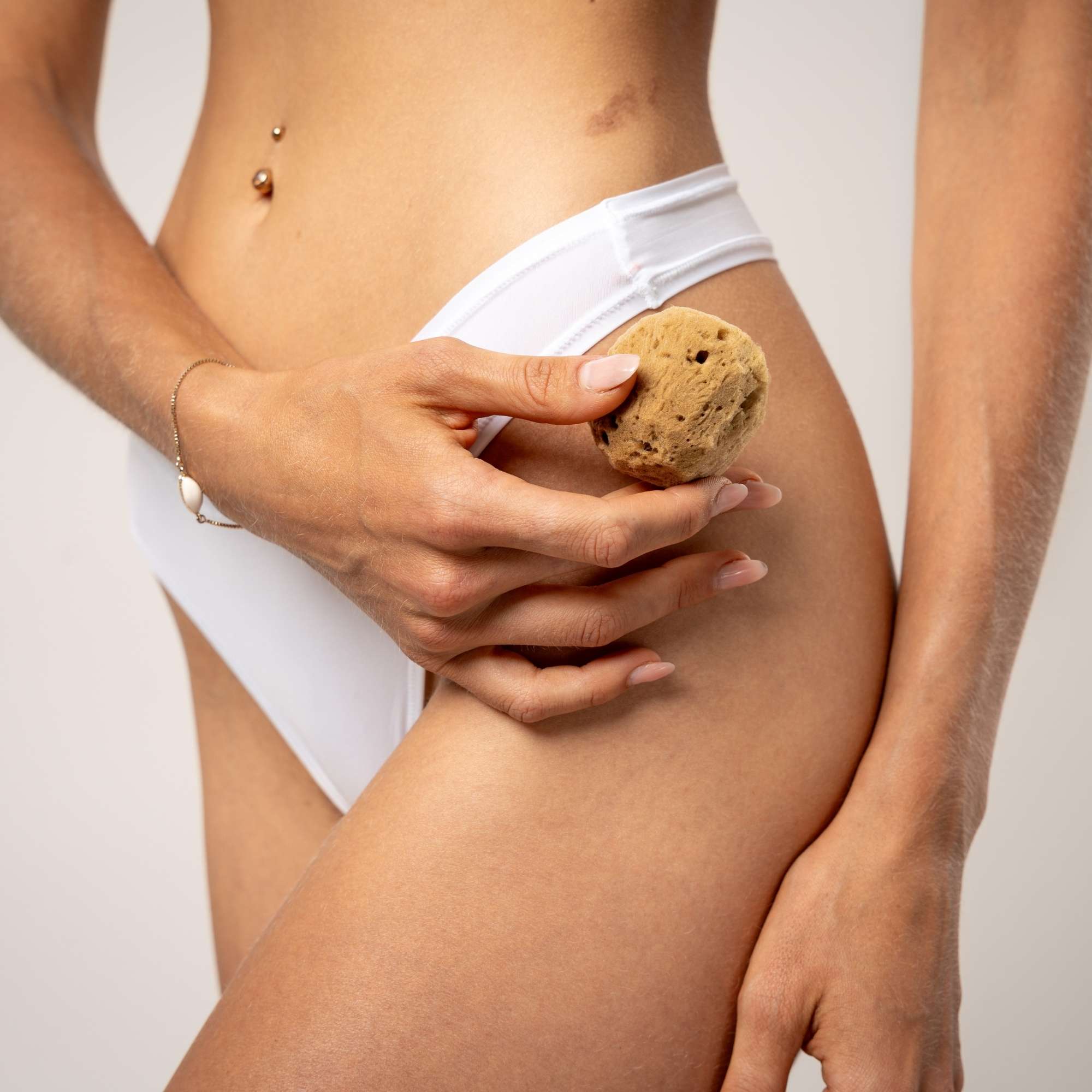
Menstrual sponge
The menstrual sponge adapts to your body in a particularly soft way – almost like a second skin. Unlike tampons or cups, it has no hard rim or retrieval string.
Some models optionally offer a short retrieval strap, for example made of soft silicone – which can also be removed if necessary.
A menstrual sponge absorbs twice as much blood as a tampon and feels secure even during longer bathing sessions.
Our tip:
Lightly moisten the menstrual sponge before inserting it; this will make it more comfortable to wear. A relaxed position, such as squatting or showering, will help with removal.
Want to try our sponges? Click here for the starter set.

Why are disposable sanitary pads not a good choice for swimming?
Disposable sanitary pads are simply not designed for swimming. They don't stay in place reliably in the water, they become saturated and slip easily – which can quickly become uncomfortable.
- The adhesive strip dissolves in water, especially during movement or prolonged bathing.
- The sanitary pad can become saturated, heavy, and detach from the underwear.
- A wet sanitary pad under your swimming trunks not only feels unpleasant, it can also show through visibly.
- Unlike in everyday life, blood is not reliably absorbed in water.
There are so-called "waterproof sanitary pads", but these are hardly widespread and do not score well in terms of comfort and protection.
How do I use a tampon, cup, or sponge correctly in water?
It's not just the choice of product that determines how comfortable you feel while swimming; the way you use it also makes a difference.
With a few simple steps, you can stay safely protected and relaxed.
Before swimming:
- Go to the toilet before you go into the water.
- Wash your hands thoroughly before inserting your period product.
- Insert the tampon, cup or sponge correctly so that it sits comfortably and does not slip.
After bathing:
- Change or clean your product promptly, especially after prolonged exposure to water.
- Rinse your sponge thoroughly to remove any possible residue from the water.
- Take a spare product with you, e.g. in a small, waterproof bag.
Our best tips for swimming during your period
No matter where you want to jump into the cool water, with our tips swimming during your period will be fun again.
In everyday life:
- Pack a spare product in case you want to change after bathing.
- Bring a small, tightly sealed bag or case to hygienically store used products.
- Drink plenty of fluids, especially in hot weather or when exercising in water.
- Stay calm if something goes wrong – that's perfectly normal.
The HERA Organics starter set includes three menstrual sponges in the size of your choice – plus a handy to-go container.This allows you to transport your sponge safely and discreetly on the go and clean it at home in peace and quiet.
To travel:
- Test your period product at home beforehand so you can use it safely on the go.
- Only pack completely dried sponges in the hygiene bag – this way they will remain hygienic until the next use.
- It's better to change your clothes more often than not often enough, especially in warm climates.
In water sports:
Make sure your product fits correctly so you can move freely – without pressure or slipping.
Is a menstrual sponge also a good choice for swimming?
Yes, the menstrual sponge is also a body-friendly, safe, and sustainable option in water. It provides reliable protection, remains comfortable to wear, and is barely noticeable.
The sponge adapts softly to your body shape without pinching or drying out. Many of our customers report that they barely feel it while swimming – unlike harder products like menstrual cups.
It also feels particularly gentle during insertion and wear.
Unlike tampons, sponges don't have a retrieval string that can be visible or get wet. This makes them a discreet solution, especially when wearing a bikini or swimsuit.
Some models optionally offer a short retrieval strap – for example made of soft silicone – which can also be removed if necessary.
Another advantage: The menstrual sponge can absorb more blood than a classic tampon. This means you don't have to change it as often – even with heavy flow or after prolonged exposure to water.
Conclusion: Swimming during your period? Yes, absolutely – with the right product.
Your period doesn't have to stop you from swimming. Whether in a lake, a pool, or the sea – with the right protection, you'll stay safe, free, and relaxed.
Products worn inside the body are the best choice in the water. Menstrual sponges offer comfort, discretion, and sustainability – especially if you're looking for something gentle that's barely noticeable.
Try out what suits you and stick with what feels good to you.
FAQs
When should I avoid swimming during my period?
If you have a fever, severe pain, an infection, or unusual discharge, it's best to avoid swimming. If you're unsure, consult your gynecologist.
Can I go swimming without a tampon?
Yes – if you're using another product worn inside the body, like a menstrual sponge or cup. Without any protection, blood can leak out.
How often do I need to change the sponge while swimming?
That depends on the heaviness of your period. Many people find changing their menstrual cup before and after swimming works well. Rinse it thoroughly afterwards.
What do I do with the used sponge when I'm out and about?
Store it in a tightly sealed, clean container and clean it as soon as you get home. Make sure it dries completely before putting it away again.
Is swimming in the sea or chlorinated water dangerous during menstruation?
No. Neither salt nor chlorinated water increases the risk of infection if you change your product regularly and pay attention to hygiene.
Does menstruation stop in water?
The water pressure slows the flow – but does not stop it. Some blood may leak out when coughing or moving, especially without protection.
About the author
Florence is responsible for the blog, social media, and newsletter at HERA Organics. She writes about body-friendly intimate hygiene, sustainable period products, and everything that makes the menstrual cycle more natural – honestly, clearly, and without taboos.
Read more

Saunas can relieve cramps and clear your head during your period. Read on to find out which types of saunas work well and what you should still be aware of when using a sauna during your menstruat...
Period and then diarrhea on top of it. That can be really unpleasant. Something most women don't talk about happens more often than you think. Read on to find out how period diarrhea occurs and wh...
