



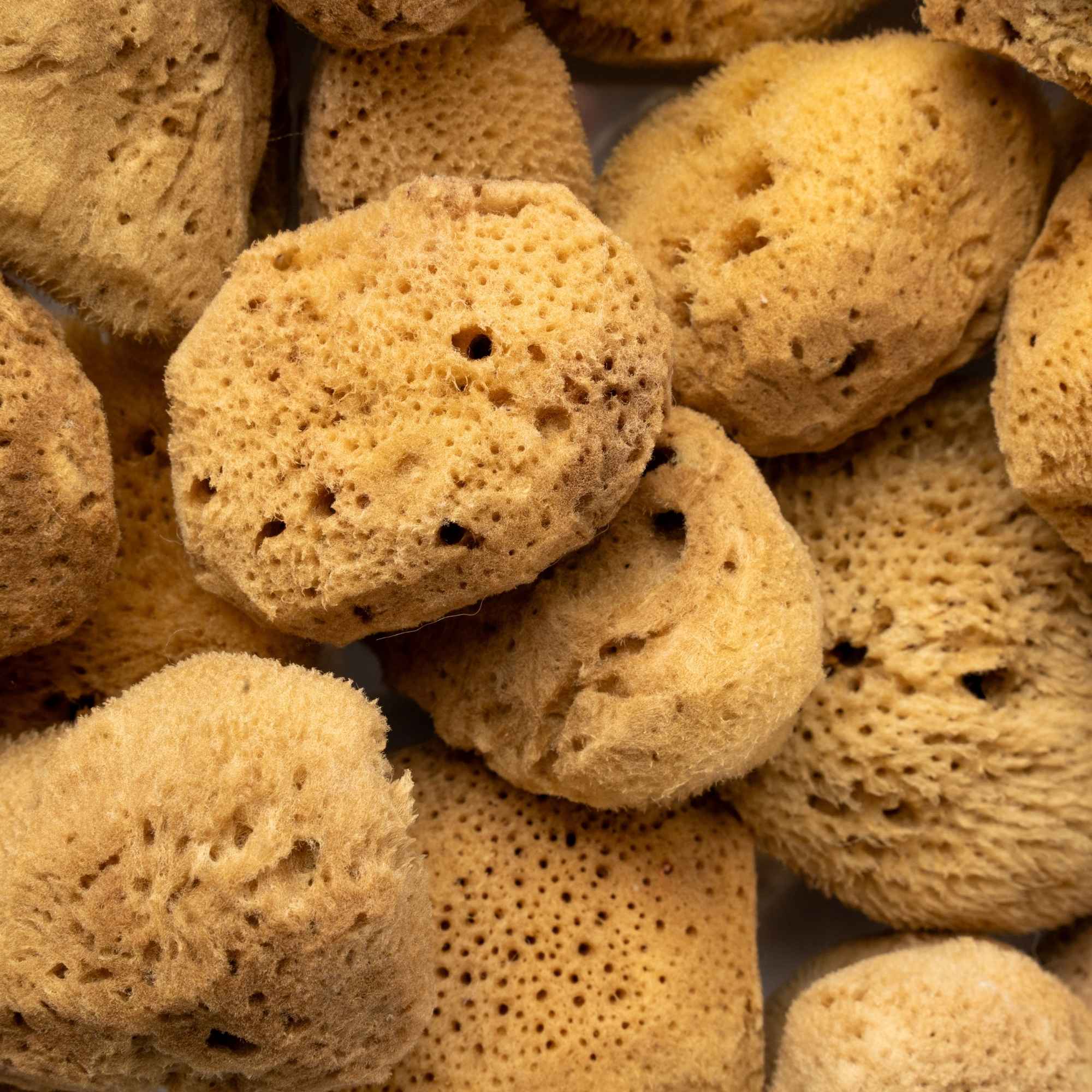
Help, my menstrual sponge won't come out – what should I do?
Can't feel your menstrual sponge anymore? Or can't get a good grip on it? Don't worry: A period sponge can't get lost inside your body – whether you use it with or without a retrieval string.
Perhaps it's sitting a little lower, or you're feeling tense. With the right technique and a little calm, the problem can usually be solved quickly.
In this article we'll show you how to safely remove the sponge – step by step.
Facts for those in a hurry
✓ A sponge cannot get lost in the body
✓ Squatting shortens the vaginal canal – you can reach better
✓ Stay calm – your body functions better without pressure
✓ A two-finger pincer grip helps with grasping
✓ Gentle pressing moves the sponge towards the exit
✓ Warm water or a bath makes removal easier
✓ No violence – get help if things don't work out.
What if I can't grab the sponge?
The menstrual sponge cannot migrate into the uterus – it always remains in the vaginal canal.
Even if it feels that way at first: your menstrual sponge hasn't disappeared. It may slip a little higher in the vaginal canal or lie sideways in the vaginal fornix, but it cannot be lost.
Your cervix – the opening to the uterus – acts like a natural barrier. It prevents the sponge from moving further upwards.
What can still happen:
• The sponge lies transversely or deep within the vaginal fornix.
• Your pelvic floor muscles are tense
• You're nervous or scared – that makes it harder to let go.
The good news: With the right technique and if you take your time, you can remove your menstrual sponge quite easily in most cases.
Do you have further concerns? Then also read: Is the menstrual sponge dangerous? Myths and facts about menstrual sponges

How to remove your menstrual sponge – step by step
With calmness, gentle technique and a little patience, the sponge can be easily removed.
Here's how it works – even if you haven't used a retrieval cord, can't feel the sponge directly, or even if the cord isn't accessible:
• Wash your hands thoroughly first.
• Squat down or sit comfortably (e.g., on the edge of the bathtub)
→ Squatting shortens the vaginal canal – this makes it easier to reach the sponge.
• Take a deep breath and relax your pelvic floor.
• Try pressing gently – this will move the sponge towards the exit.
• Insert two fingers and use the so-called pincer grip
• Grip the sponge from the side or below and pull it out slowly.
→ If you have a retrieval cord but can't find it right away: Gently feel around – it might be nestled against the wall.
• Warm water or a relaxing bath can also help
Tip: The more relaxed you are, the easier the removal will be. Even if it feels strange – trust your body and take your time.
Why doesn't the sponge come out?
The anatomy, tension, or position of the sponge can make removal difficult – but never prevent it.
You're not alone – many women feel the same way. With a little practice, it gets easier.
The first time, I also had trouble removing the sponge. At first, I thought I had pushed it in too far. I was totally tense, but after taking a few deep breaths and squatting down, I was able to grab it with two fingers.
Since then I know: It simply takes calm and the right technique.
With each cycle, confidence grows. And when you know how to react, even an unfamiliar situation feels less threatening.
If your menstrual sponge doesn't come out easily, it's usually due to one of these reasons:
- Your pelvic floor is tense
- The sponge is still too dry
- Your sponge is positioned in an inconvenient location
- You had sex before the procedure.
- You're still unsure about touch.
Sometimes all it takes is a second attempt or a different position.
What you should avoid – and when medical help is necessary
Never try to remove the sponge by force or tools. Get help if you can't grip the sponge or if you experience pain.
What you should avoid:
• Tear the sponge with force or a sudden pull
• Use tweezers, brushes, or other aids
• Repeatedly tense and squeeze
• Panic or put yourself under pressure
When you should seek medical help:
• You have made several attempts, but achieved nothing.
• You feel pain, pressure, or unexpected bleeding
• You feel unwell, experience circulatory problems or fever
• The sponge remains in place for more than 12 hours and cannot be removed.
A visit to your gynecologist is nothing to be ashamed of. These situations happen – and professionals can help quickly and safely.
Removing sponges will be very easy in the future.
With a few simple tricks, you can make removal much easier next time.
Our tips:
• Moisten the sponge before insertion
• Do not insert too deeply
• Wait until the sponge is fully saturated
• Stay relaxed – warmth can help
• Use the retrieval cord if you wish.
If you're looking for a sponge with a retrieval aid : The HERA Organics menstrual sponge has a discreet retrieval string made of medical-grade silicone. It's shorter than on many conventional products, doesn't protrude, and is barely visible even under tight clothing or bikini bottoms.
Unlike fabric, silicone doesn't absorb water, which is especially pleasant when showering or swimming. If you prefer to use it without the strap: it can be easily removed.
FAQs - Frequently Asked Questions & Misunderstandings
Can a menstrual sponge get lost inside the body?
No. The vagina is a closed space – the sponge cannot migrate into the uterus or “disappear”.
How long can the sponge stay in?
Depending on the severity of your bleeding, you should change it every 3 to 8 hours.
What should I do if I can't find the retrieval cord?
It can nestle against the vaginal wall. It can usually be reached easily while squatting, using a pincer grasp.
Can I use warm water or a bath to help?
Yes – this relaxes the muscles and makes removal easier.
Can I reuse the sponge after a difficult removal process?
Yes – you can continue using the sponge normally afterwards. Thorough cleaning is important. The HERA Organics starter set includes natural cleaning tablets that deeply clean your sponge and keep it hygienically fresh.
How do I remove the menstrual sponge the first time?
Find a quiet moment in the bathroom, squat down, and take your time. Use the pincer grip with two fingers and gently squeeze – like when you're urinating.
What if I'm out and about and can't get the sponge out?
Stay calm. Try squatting in a clean toilet. If that doesn't work, wait a while and try again later.
Is it possible to lose the sponge during sex?
No – it stays in the vaginal canal. It can shift, but it can also be removed afterwards.
👉 Read also : Pleasure instead of frustration: How to make sex enjoyable & intense during your period
Does removal also work with long fingernails?
Yes, with a little caution. Use your fingertips and proceed slowly.
What if I don't dare to insert the sponge at all?
That's perfectly fine. You can ease into it – for example, with a smaller sponge or by inserting just a small part of it. At HERA Organics, we offer the menstrual sponge in three sizes. Many people start with size S to get a feel for how it works.
About the author
Florence is responsible for the blog, social media, and newsletter at HERA Organics. She writes about body-friendly intimate hygiene, sustainable period products, and everything that makes the menstrual cycle more natural – honestly, clearly, and without taboos.
More about HERA Organics →
Read more

A kitchen sponge as a tampon? Gross! We often read such comments under our social media posts. In this article, we therefore debunk the (allegedly) 6 biggest disadvantages of menstrual sponges.
Menstrual Sponge & IUD? No Problem. These Tips Help You Use It with Confidence.
